
Hardwood Flooring Installation in Helena, MT
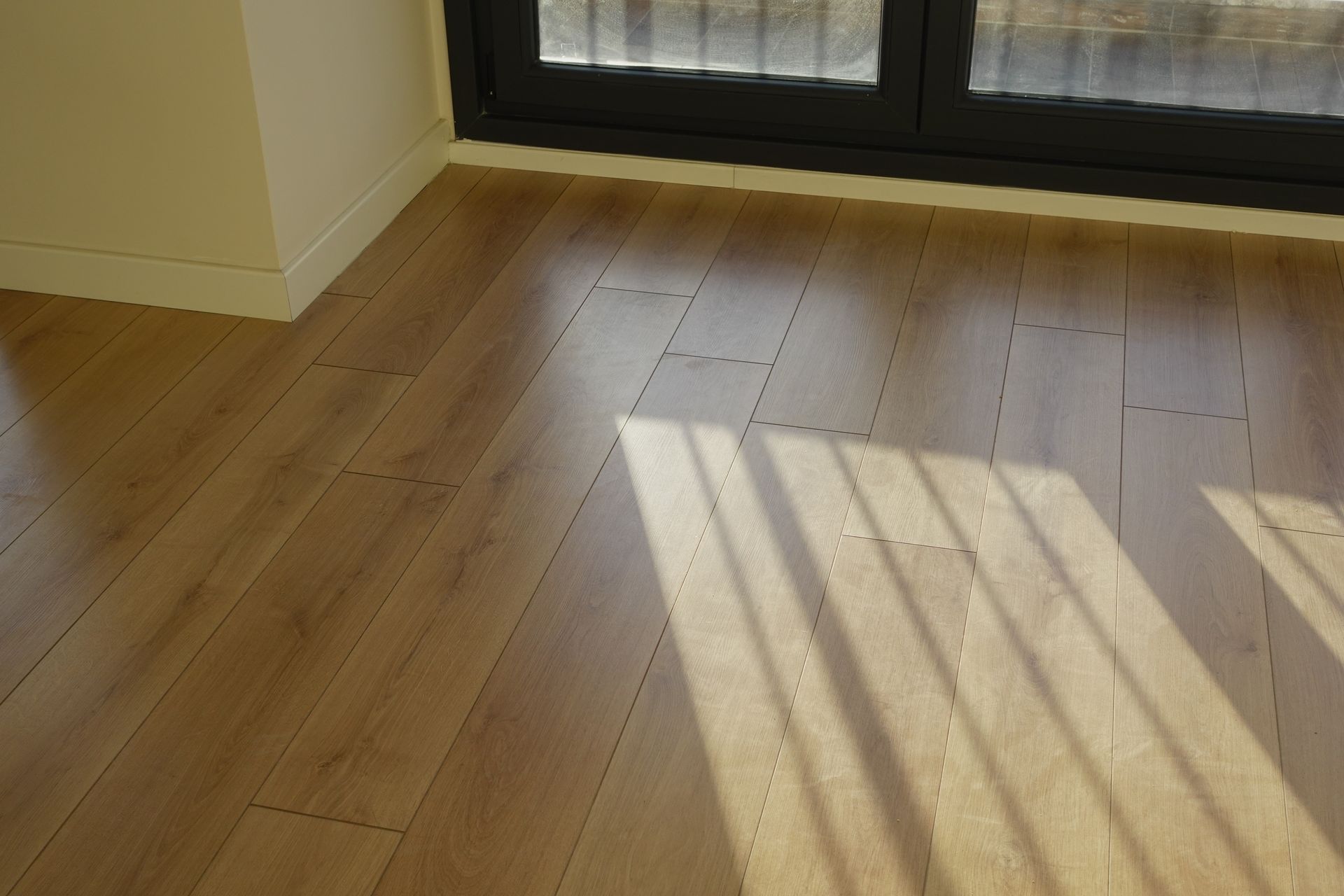
Hardwood is the floor people picture when they think of a warm, finished home. It ages well, it can be refinished instead of replaced, and it fits nearly any style of house. Rodriguez Painting provides hardwood flooring installation in Helena, MT, for living rooms, bedrooms, dining rooms, and hallways. Every installation starts with prep and wood choices that account for Montana's dry air.

Can Hardwood Floors Be Installed in a Basement?
Solid hardwood should not be installed in a basement, but engineered hardwood can go below grade over a properly prepared slab. Basement concrete can carry moisture up from the soil, and solid boards absorb it, then cup and swell. Engineered hardwood has a layered core that resists that movement. Installed over a moisture barrier, it gives a basement the look of real wood without the risk.
Kitchens and bathrooms see more steam and scrubbing than other rooms. A repaint gives them a fresh look and a finish that holds up to that use. Bathrooms in particular benefit from a finish that stands up to daily humidity. It's one of the quickest ways to change how a room feels without a remodel.
Repairing Cracks and Damage
Cracks, pits, and spalled spots are filled before coating, so they do not telegraph through the finish. If the slab has heavier damage, garage floor resurfacing restores the surface first.
Solid and Engineered Hardwood
Both types have a real wood surface. The difference is what sits underneath.
Solid Hardwood
Each board is one piece of wood, typically 3/4 inch thick. Solid hardwood can be sanded and refinished many times over its life, which is why century-old floors in older Helena homes are still in use. It belongs on wood subfloors above grade.
Engineered Hardwood
Engineered boards have a top layer of real hardwood bonded over a plywood or composite core. The cross-layered core makes them more stable when humidity changes. That stability makes engineered hardwood a strong choice for basements, over concrete, and in rooms with radiant heat.
Renovations Around Helena
Most renovation work happens in Helena itself, with projects in East Helena, Boulder, and Townsend as well. If your home is outside those towns, a quick call will confirm whether it is within range. For everything else the business offers, visit the Rodriguez Painting home page.
Choosing a Species and Width
Wood species changes both the look and how well the floor resists dents:
- Oak is the most common choice, with a visible grain that hides scratches.
- Hickory is harder and shows bold color variation.
- Maple is hard and smooth, with a quieter grain that shows wear more easily.
Board width is a style choice with a practical side. Wider planks show more of the wood's character, but they also move more with seasonal humidity. In a dry climate like Helena's, wide solid boards are more likely to show gaps in winter. Narrower boards or engineered planks keep tighter seams.
How Wood Floor Installation Works
A hardwood floor depends on the subfloor beneath it. The installation runs in three stages:
- The subfloor is checked for level, squeaks, and loose spots, and those are fixed first.
- Boards are delivered and allowed to acclimate to the house before installation.
- Boards are laid out to mix color and length, so no area looks patchy.
Solid hardwood is usually nailed down to a wood subfloor. Engineered boards can be nailed, glued, or installed as a floating floor, depending on the product and what sits underneath. Baseboards and transitions finish the edges.
New hardwood often comes with fresh walls. Doing the interior painting before the floor goes in keeps drips off the new boards. Wood floors are also a natural fit for home additions, where they tie new rooms into the rest of the house. The flooring page compares hardwood with tile and epoxy room by room.
Hardwood Floors Around Helena
Hardwood projects come from across Helena and from Townsend and Boulder. When you call, have rough room sizes and the current floor type ready. For the rest of what the business offers, visit the Rodriguez Painting home page.
Drywall, From Small Holes to Full Rooms
Damaged walls show through any paint. A doorknob hole, a water stain, or a crack running out from a window corner all need fixing first. Drywall repair patches those spots so the wall reads as one smooth surface again. Some projects need new walls: a basement being finished, a wall being moved, a room being opened up. Drywall installation takes those from bare studs to a surface ready for paint. The work includes tape and bed on every seam and texture matched to the rest of the house, so new sections blend with the old. The same business hangs, finishes, and paints the drywall. There is no handoff between trades, and no question about who owns a seam that shows.
Hardwood Flooring Installation FAQ
How many times can a hardwood floor be refinished?
Solid 3/4 inch hardwood can typically be sanded and refinished 4 to 6 times or more over its life. Engineered hardwood depends on the thickness of its top wear layer. A 2 mm layer may allow one light refinish, while a 4 mm or thicker layer can handle two or three.
Which wood species is the most durable?
Harder woods resist dents better. On the Janka hardness scale, higher numbers mean more resistance to dents from furniture legs, dropped items, and pet claws. Common species rate approximately:
- Red oak: 1,290
- White oak: 1,360
- Hard maple: 1,450
- Hickory: 1,820
Why do gaps appear between boards in winter?
Wood shrinks as it loses moisture. Helena's winters, combined with indoor heating, can drop indoor humidity very low, so boards shrink and small gaps open between them. Most gaps close again in summer. Keeping indoor humidity between about 35 and 55 percent with a humidifier limits the movement.
What is a floating floor?
A floating floor is not nailed or glued to the subfloor. The boards lock to each other and rest on an underlayment, which lets the whole floor expand and contract as one piece. Many engineered hardwood products install this way, which makes them a common choice over concrete.
How do I protect a new hardwood floor?
A few habits keep a new floor looking good:
- Put felt pads under furniture legs.
- Use mats at entry doors to catch grit and snowmelt.
- Sweep or vacuum regularly, since sand acts like sandpaper underfoot.
- Clean with a damp, not wet, mop and a cleaner made for finished wood floors.