
Drywall Repair in Helena, MT
A hole behind a door, a crack climbing from the corner of a window, a stain spreading across the ceiling after a leak. Damage like this rarely fixes itself, and paint alone will not hide it. Rodriguez Painting handles drywall repair for homes in Helena, MT. Each patch is finished so it disappears into the wall around it.

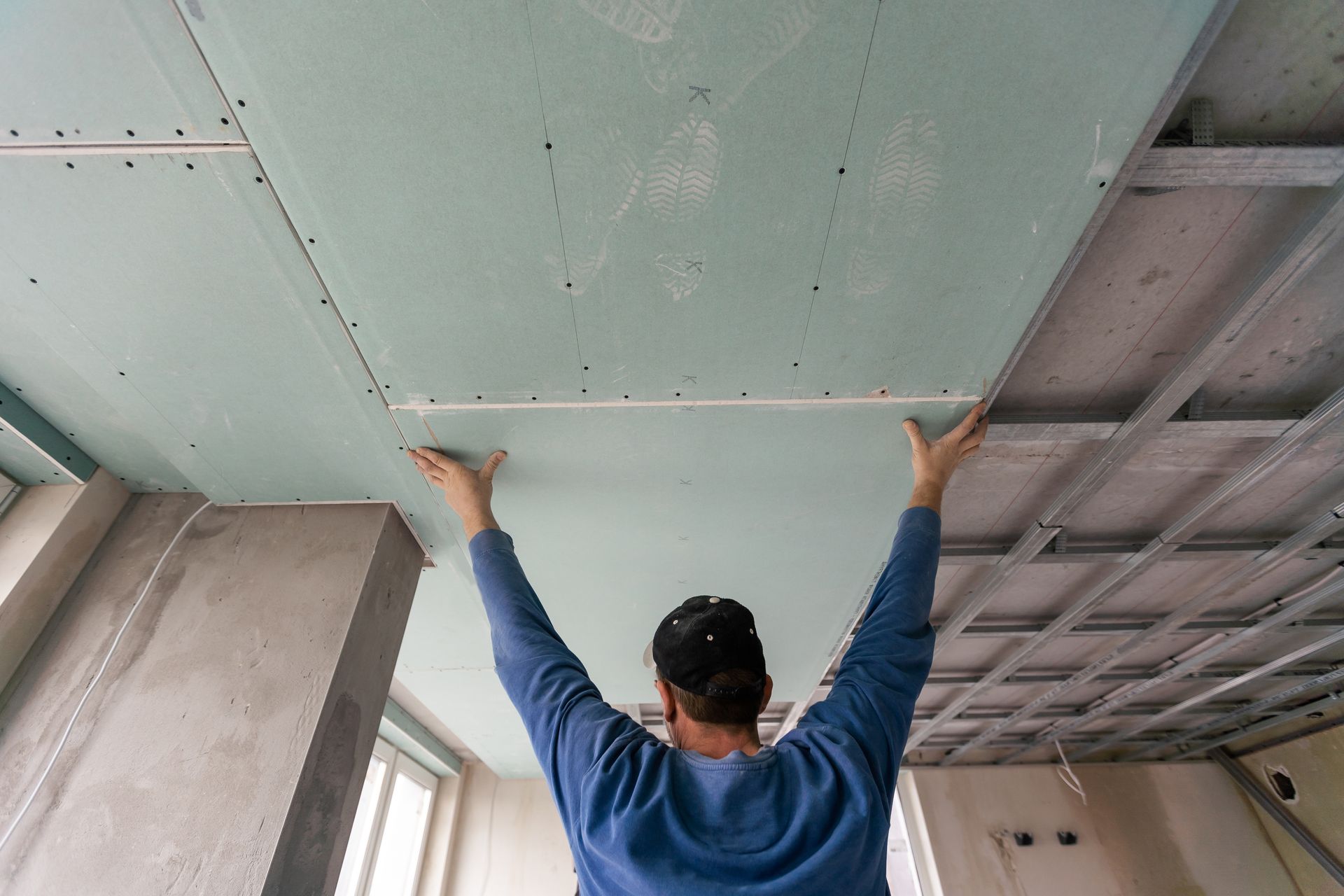
How a Repair Comes Together
The process depends on the size of the damage, but the order rarely changes.
First, anything loose, crumbling, or wet is cut back to sound material. Larger openings get backing or a new piece of drywall fastened in place. The seams are taped and covered with joint compound in thin coats. Each coat dries before the next goes on, and the surface is sanded smooth between them.
Once the patch is flat, the texture is matched to the surrounding wall. Then primer goes on, so the new compound takes paint the same way the old surface does. Skipping primer is why so many patches show as a dull spot under fresh paint.
Kitchens and bathrooms see more steam and scrubbing than other rooms. A repaint gives them a fresh look and a finish that holds up to that use. Bathrooms in particular benefit from a finish that stands up to daily humidity. It's one of the quickest ways to change how a room feels without a remodel.
Repairing Cracks and Damage
Cracks, pits, and spalled spots are filled before coating, so they do not telegraph through the finish. If the slab has heavier damage, garage floor resurfacing restores the surface first.
The Damage We See Most
Every house is different, but the same few problems turn up again and again.
Holes and Dents
Doorknobs, furniture, and moving day account for a lot of these. Small dents fill with compound. Larger holes need a patch with something solid behind it, so the repair does not flex when it is touched.
Cracks at Corners and Seams
Cracks tend to start where the wall is weakest: the corners of doors and windows, and the joints between sheets. Houses settle, and framing shifts with the seasons. A crack that is only filled will often come back. One that is taped and coated over has a much better chance of staying closed.
Nail and Screw Pops
Small round bumps in a row usually mean fasteners have backed out as the framing dried or moved. The fix is to secure the board again, then cover the old fastener so the bump is gone for good.
Water Damage
Leaks from a roof, a bathroom above, or a pipe in the wall leave stains, sagging, or soft spots. Board that is still firm can often be sealed and painted. Board that has gone soft has to come out.
Renovations Around Helena
Most renovation work happens in Helena itself, with projects in East Helena, Boulder, and Townsend as well. If your home is outside those towns, a quick call will confirm whether it is within range. For everything else the business offers, visit the Rodriguez Painting home page.
Matching Texture So the Patch Disappears
A smooth patch in the middle of a textured wall is easy to spot from across the room. Whether your walls have orange peel, knockdown, or a smooth finish, the repaired area is textured to match before any paint goes on.
When a room needs more than a patch, the work can carry straight on to interior painting, so the whole wall or room gets an even coat. If the damage turns out to be too widespread for patching, replacing full sheets through drywall installation may make more sense than stacking repairs on top of each other.
Repairs Around Helena
Most repair calls come from Helena. Homeowners in East Helena and Boulder can reach out as well. Describe the damage, and how many spots need attention, when you get in touch. For an overview of everything else this business takes on, visit the Rodriguez Painting home page.
Drywall, From Small Holes to Full Rooms
Damaged walls show through any paint. A doorknob hole, a water stain, or a crack running out from a window corner all need fixing first. Drywall repair patches those spots so the wall reads as one smooth surface again. Some projects need new walls: a basement being finished, a wall being moved, a room being opened up. Drywall installation takes those from bare studs to a surface ready for paint. The work includes tape and bed on every seam and texture matched to the rest of the house, so new sections blend with the old. The same business hangs, finishes, and paints the drywall. There is no handoff between trades, and no question about who owns a seam that shows.
Interior Painting FAQ
How big a hole can be patched instead of replaced?
Holes up to a few inches across can usually be covered with a mesh or metal patch and compound. Openings larger than about 6 inches generally need a new piece of drywall cut to fit and fastened to backing. Damage that runs across several feet of a wall may be better handled by replacing whole sections.
How long does a repair take?
Joint compound goes on in several coats, and standard compound needs to dry between each one. Drying commonly takes about 24 hours per coat, and longer in cool or humid conditions. A simple patch can still take more than one visit before it is ready for paint.
Why do cracks keep coming back above my doors?
Door and window openings are where framing movement concentrates. If a crack is only filled with compound, the next shift in the house reopens it. Embedding paper or mesh tape across the crack, then coating over it, bridges the gap so it holds through movement.
Can water-stained drywall be saved?
It depends on the board. If it is dry and firm, the stain can be sealed with a stain-blocking primer before painting, so it does not bleed through. If the board is soft, sagging, or crumbling, that section is cut out and replaced. Either way, the leak has to be fixed first.
Will the repaired spot look different after painting?
It can, if the patch is left unprimed or the texture does not match. New compound absorbs paint differently from a painted surface, which leaves a dull or shiny spot called flashing. Priming the patch and matching the wall texture before painting prevents this.