
Epoxy Flooring in Helena, MT
Plain concrete stains, dusts, and holds onto every drip. An epoxy floor turns that same slab into a hard, glossy surface you can wipe clean with a mop. Rodriguez Painting installs epoxy flooring in Helena, MT, for garages, basements, workshops, and utility rooms. Proper prep comes first, so the coating stays bonded instead of peeling.

How Long Does an Epoxy Floor Last?
A properly installed epoxy floor typically lasts 10 to 20 years in a residential garage or basement. The range depends on how well the concrete was prepared, how thick the coating is, and how much traffic and abuse it sees. Floors that skip grinding or go on too thin can start peeling within a year or two. That is why prep and coating thickness matter more than the product name on the can.
Where Epoxy Floors Work Best
Epoxy needs a concrete base, so it fits wherever a slab is already the floor:
- Garages are the most common use, since an epoxy floor coating resists oil, antifreeze, and the brine that rolls off tires in winter.
- Basements gain a brighter, cleaner surface that reflects light in rooms that often have little of it.
- Workshops benefit from a floor that shrugs off dropped tools, sawdust, and chemical spills.
- Laundry and utility rooms get a surface that handles water without soaking it up.
Kitchens and bathrooms see more steam and scrubbing than other rooms. A repaint gives them a fresh look and a finish that holds up to that use. Bathrooms in particular benefit from a finish that stands up to daily humidity. It's one of the quickest ways to change how a room feels without a remodel.
Prep Decides Whether It Lasts
Most failed epoxy floors fail because of what happened before the coating went down. Prep runs in three steps.
Grinding the Surface
Smooth or sealed concrete gives epoxy nothing to grab. The slab is mechanically ground to open the pores and create a rough profile, much like sandpaper on wood. Acid etching, common in store-bought kits, does not create the same bond.
Repairing Cracks and Damage
Cracks, pits, and spalled spots are filled before coating, so they do not telegraph through the finish. If the slab has heavier damage, garage floor resurfacing restores the surface first.
Checking for Moisture
Concrete that pushes moisture up from below can lift a coating off in blisters. Basement slabs in particular are checked before work begins, and the system is chosen to match.
Finish Options
Epoxy floors come in a few common styles.
Solid Color
A single color coat gives a clean, uniform look. Light gray and tan are popular in garages because they hide dust and brighten the space.
Flake Epoxy
Colored vinyl flakes are broadcast into the wet coating, then sealed under a clear topcoat. Flake epoxy hides dirt and small imperfections, and it adds texture that helps with grip.
Metallic Epoxy
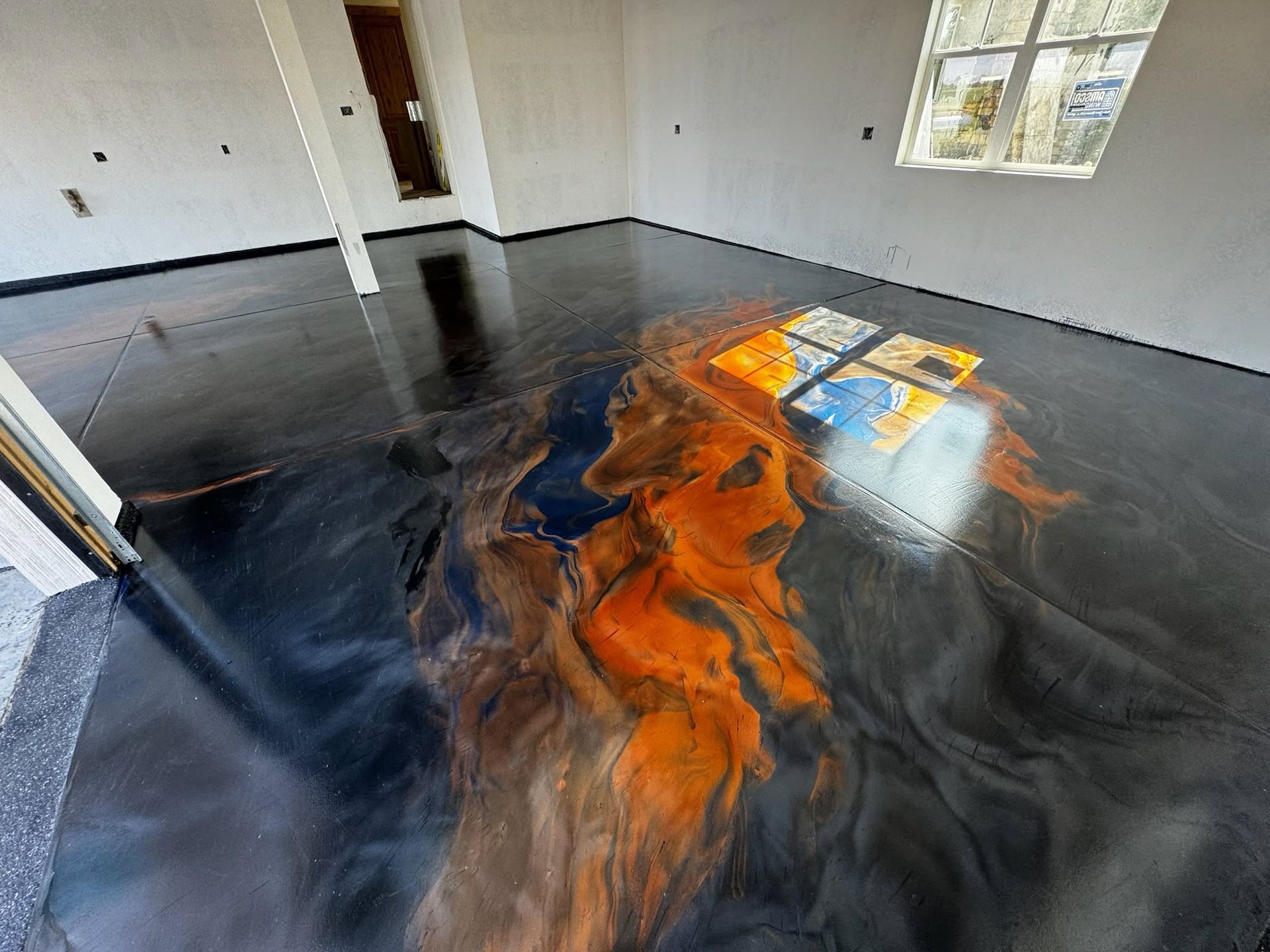
Metallic pigments swirl through the coating to create a marbled, almost three-dimensional look. It is used more in basements, bars, and living spaces than in working garages.
Renovations Around Helena
Most renovation work happens in Helena itself, with projects in East Helena, Boulder, and Townsend as well. If your home is outside those towns, a quick call will confirm whether it is within range. For everything else the business offers, visit the Rodriguez Painting home page.
Epoxy Compared to Other Floors
Epoxy is one of several ways to finish a slab. Polished concrete keeps the natural stone look without a coating, and tile adds a different look altogether. The
flooring page compares the options room by room. Epoxy also has its own category, and
epoxy coatings covers the material more broadly.
Epoxy Floors Around Helena
Epoxy projects come from across Helena and from Boulder and East Helena. When you call, the size of the space and a photo of the current slab help get things started. For everything else the business offers, visit the Rodriguez Painting home page.
Drywall, From Small Holes to Full Rooms
Damaged walls show through any paint. A doorknob hole, a water stain, or a crack running out from a window corner all need fixing first. Drywall repair patches those spots so the wall reads as one smooth surface again. Some projects need new walls: a basement being finished, a wall being moved, a room being opened up. Drywall installation takes those from bare studs to a surface ready for paint. The work includes tape and bed on every seam and texture matched to the rest of the house, so new sections blend with the old. The same business hangs, finishes, and paints the drywall. There is no handoff between trades, and no question about who owns a seam that shows.
Epoxy Flooring FAQ
Why do some epoxy floors peel under car tires?
That problem, called hot tire pickup, happens when warm tires soften a thin coating and pull it off the slab as they cool. It usually traces back to light prep, acid etching instead of grinding, or a single thin coat. A ground surface and a full multi-coat system greatly reduce the risk.
Is an epoxy floor slippery?
A smooth epoxy floor can be slick when wet, especially with melting snow in a garage. Anti-slip aggregate mixed into the topcoat adds grip without changing the look much. Flake systems also add texture underfoot.
Can epoxy be installed in a basement?
Yes, after the slab is checked for moisture. Below-grade concrete can carry moisture vapor up from the soil, and high levels cause blisters and peeling. Where moisture is elevated, a moisture-mitigating primer goes on before the epoxy.
Can epoxy go down in winter?
Most epoxy products need the air and the concrete to be at least about 50°F during application and curing. In Helena, that means an unheated garage in January is a problem. A heated space, or scheduling the work for warmer months, keeps the coating curing properly.
How long after installation can I use the floor?
Foot traffic is typically fine after about 24 hours. Vehicles usually need 3 to 7 days, depending on the product and temperature. The coating keeps hardening during that time, so heavy items and hot tires should wait until it has fully cured.