
Epoxy Coatings in Helena, MT
Some surfaces need more protection than paint or sealer can give. Epoxy cures into a hard, dense layer that resists oil, salt, solvents, and standing water, and it cleans up with a damp mop. Rodriguez Painting applies epoxy coatings in Helena, MT, in garages, basements, workshops, and other spaces where a surface has to take real punishment.

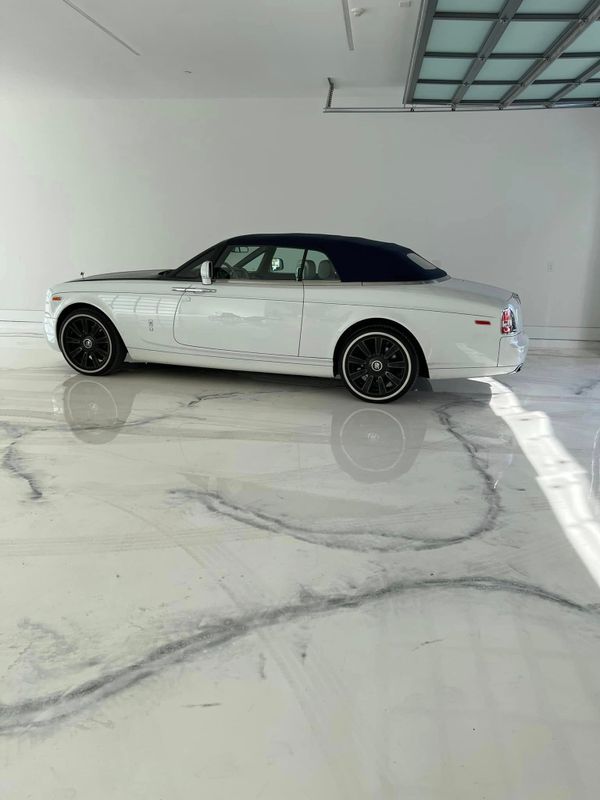
What Surfaces Can Epoxy Be Applied To?
Epoxy bonds best to properly prepared concrete, which is why floors are its most common use. With the right primer and prep, it can also bond to wood, metal, and some other rigid surfaces. What it cannot handle is a surface that flexes, stays damp, or has a weak top layer, since the coating is only as strong as what it grips.
How Epoxy Works
Epoxy is a two-part material. A resin and a hardener are mixed right before application, and a chemical reaction turns the liquid into a solid. That reaction is what separates it from paint, which simply dries as water or solvent evaporates.
The cured epoxy resin forms a continuous layer that is much harder and thicker than paint. It does not soften when a hot tire or a spill sits on it, and it does not absorb liquids. Because it cures rather than dries, temperature and timing matter during application. Each batch has a working window before it starts to set.
Kitchens and bathrooms see more steam and scrubbing than other rooms. A repaint gives them a fresh look and a finish that holds up to that use. Bathrooms in particular benefit from a finish that stands up to daily humidity. It's one of the quickest ways to change how a room feels without a remodel.
Repairing Cracks and Damage
Cracks, pits, and spalled spots are filled before coating, so they do not telegraph through the finish. If the slab has heavier damage, garage floor resurfacing restores the surface first.
Where Epoxy Makes Sense
The common thread is a hard-working space with a concrete floor.
Garages
Road salt, melting snow, oil drips, and tire traffic all hit a garage floor, and a coating keeps them from soaking into the slab. Epoxy flooring covers garage and basement floors in detail, including finish styles like flake and metallic.
Basements and Workshops
A coated basement floor brightens a dark room and is easy to keep clean. In a workshop, it stands up to dropped tools, sawdust, and chemical spills that would stain bare concrete.
Utility and Laundry Rooms
Water heaters, washers, and floor drains mean occasional leaks. Epoxy keeps water on the surface where it can be wiped up instead of soaking into the slab.
Renovations Around Helena
Most renovation work happens in Helena itself, with projects in East Helena, Boulder, and Townsend as well. If your home is outside those towns, a quick call will confirm whether it is within range. For everything else the business offers, visit the Rodriguez Painting home page.
Prep Comes Before Coating
An epoxy contractor spends more time on the surface than on the coating. Concrete is ground to open its pores, and cracks and pits are filled. The slab is also checked for moisture that could push the coating off from below.
When the concrete is badly worn, garage floor resurfacing restores it before any epoxy goes down. For the broader range of slab work, including polishing and repair, see the concrete page.
Epoxy Work Around Helena
Epoxy projects come from across Helena and from Townsend and East Helena. When you call, describe the space, roughly how big it is, and what it gets used for. For the full range of services, visit the Rodriguez Painting home page.
Drywall, From Small Holes to Full Rooms
Damaged walls show through any paint. A doorknob hole, a water stain, or a crack running out from a window corner all need fixing first. Drywall repair patches those spots so the wall reads as one smooth surface again. Some projects need new walls: a basement being finished, a wall being moved, a room being opened up. Drywall installation takes those from bare studs to a surface ready for paint. The work includes tape and bed on every seam and texture matched to the rest of the house, so new sections blend with the old. The same business hangs, finishes, and paints the drywall. There is no handoff between trades, and no question about who owns a seam that shows.
Epoxy Coatings FAQ
What is the difference between epoxy and garage floor paint?
Garage floor paint is usually a one-part product that dries as it loses water or solvent, leaving a thin film. An epoxy coating is a two-part system that cures through a chemical reaction into a thicker, harder layer. Epoxy resists chemicals, abrasion, and hot tires far better, while floor paint tends to wear through and peel within a few years.
Does epoxy have a strong smell during installation?
It depends on the product. Solvent-based epoxies give off strong fumes. Water-based and 100 percent solids epoxies have far less odor and lower volatile organic compounds. Ventilation during application and the first day of curing keeps any smell from lingering in the house.
Will epoxy turn yellow over time?
Many epoxies amber, or yellow slightly, with long exposure to sunlight. That matters most near open garage doors and windows. A UV-stable topcoat applied over the epoxy helps prevent yellowing and adds a layer of scratch resistance.
Can new epoxy go over an old coating?
Only if the old coating is sound and well bonded, because new epoxy is only as secure as the layer underneath it. A peeling or flaking coating has to be removed first, usually by grinding. A coating in good condition still needs to be sanded so the new layer can grip.
How do I clean an epoxy-coated surface?
Sweep or dust-mop regularly to remove grit, which dulls the finish over time. For washing, use warm water with a mild, non-soap cleaner and a soft mop. Soap-based cleaners can leave a film that makes the surface slippery and hazy.