
Exterior Painting in Helena, MT
The outside of a house works harder than any wall inside it. Paint on siding and trim takes direct sun all summer, snow and ice all winter, and every swing in between. Once that paint starts to crack and lift, the wood underneath is next. Rodriguez Painting provides exterior painting for homes in Helena, MT. The goal is a finish that looks sharp on the street and keeps protecting the house for years after the ladders come down.

What Gets Painted
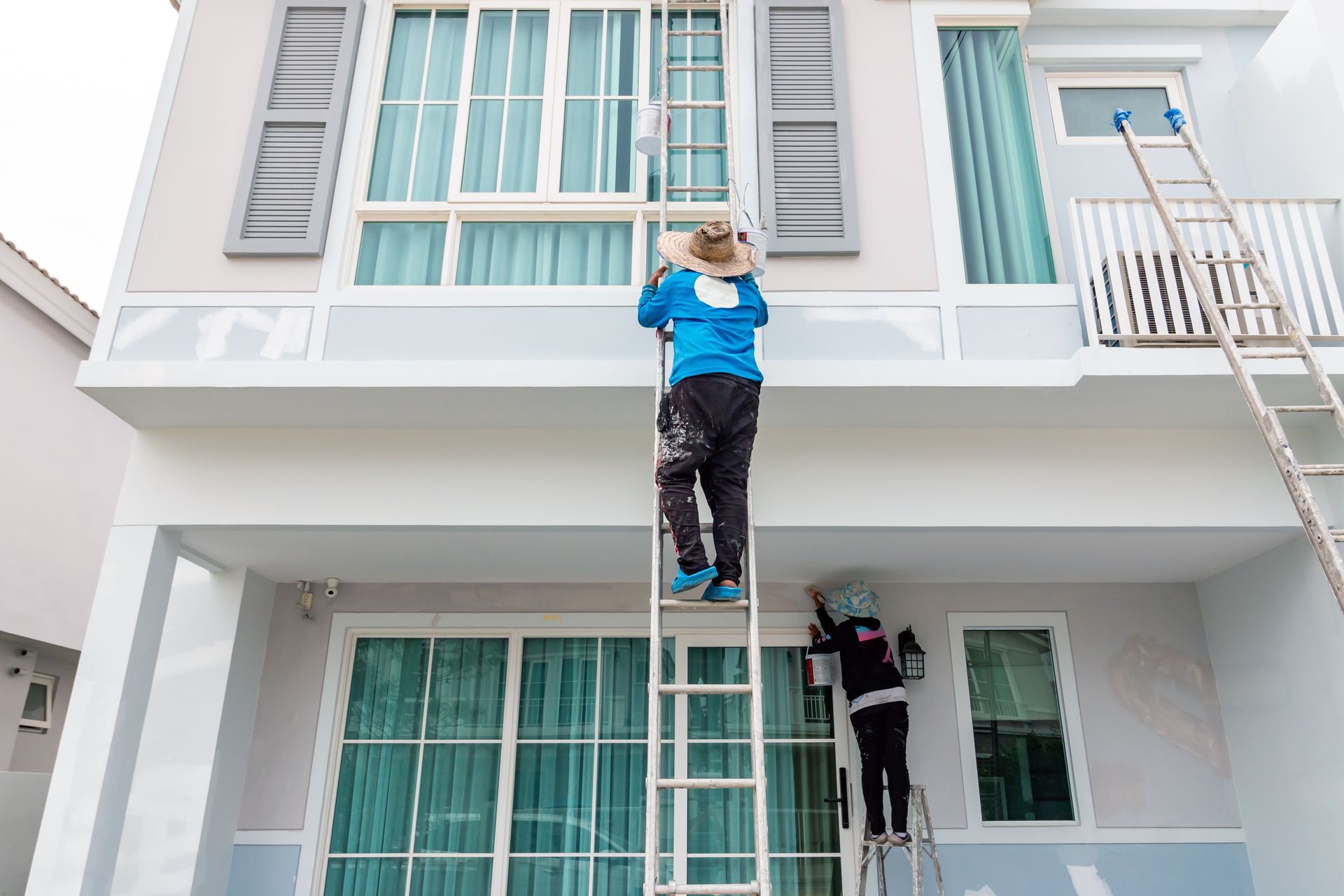
Siding makes up most of the surface area on a typical repaint. Trim, fascia boards, soffits, window casings, entry doors, garage doors, and shutters are where the details live. Those smaller surfaces often weather unevenly. A south-facing fascia board can be peeling while the north side of the house still looks fine, so each elevation gets looked at on its own terms.
Some jobs cover the whole house. Others are targeted: refreshing trim and doors, repainting a single sun-beaten side, or bringing a garage door back in line with the rest of the exterior.
What Montana Weather Does to Paint
Helena sits above 4,000 feet. At that elevation ultraviolet light is stronger than at sea level, and it breaks down paint binders over time. The result is chalking, fading, and eventually cracking.
Cold adds a second problem. Water gets into small cracks, freezes, expands, and widens the gap. After enough cycles the paint film lets go. The dry air between storms then pulls moisture out of wood unevenly, which leaves boards prone to checking and splitting.
None of that can be avoided. A paint system built for it simply lasts much longer than one that is not.
Kitchens and bathrooms see more steam and scrubbing than other rooms. A repaint gives them a fresh look and a finish that holds up to that use. Bathrooms in particular benefit from a finish that stands up to daily humidity. It's one of the quickest ways to change how a room feels without a remodel.
Repairing Cracks and Damage
Cracks, pits, and spalled spots are filled before coating, so they do not telegraph through the finish. If the slab has heavier damage, garage floor resurfacing restores the surface first.
Prep That Holds the Paint On
Exterior prep is slower and dirtier than the painting itself, and it matters more.
Cleaning
Dirt, chalk, and mildew keep new paint from bonding. Surfaces are washed and allowed to dry before anything else happens.
Scraping and Sanding
Every loose or lifting flake of old paint comes off. Edges where sound paint meets bare wood are sanded smooth, so the transition does not telegraph through the new coat.
Caulking and Priming
Gaps at trim joints, window frames, and corner boards are sealed to keep water out. Bare wood gets primer, since topcoat alone does not bond or seal raw wood as well.
Boards that have rotted, split badly, or come loose need more than paint. Those are addressed through siding repair and replacement before the coating goes on, because paint over failing wood will not hold.
Renovations Around Helena
Most renovation work happens in Helena itself, with projects in East Helena, Boulder, and Townsend as well. If your home is outside those towns, a quick call will confirm whether it is within range. For everything else the business offers, visit the Rodriguez Painting home page.
Picking the Right Time of Year
Exterior paint has temperature limits. Most standard latex products need air and surface temperatures of at least 50°F while the paint cures, though some are formulated to go on as low as 35°F. In Helena, that makes late spring through early fall the main window.
Even in summer, timing during the day counts. Paint applied in hot midday sun on a dark wall can dry too fast to level out. Paint applied late on a cool evening may still be wet when the dew settles. Working each side of the house as the sun moves helps avoid both.
Finishing the Whole House
An exterior repaint often prompts a look at the rooms inside, and interior painting can follow once the weather turns. Exterior projects come from across Helena, with homes in East Helena and Boulder in reach as well. Rodriguez Painting's other services are listed on the main page.
Drywall, From Small Holes to Full Rooms
Damaged walls show through any paint. A doorknob hole, a water stain, or a crack running out from a window corner all need fixing first. Drywall repair patches those spots so the wall reads as one smooth surface again. Some projects need new walls: a basement being finished, a wall being moved, a room being opened up. Drywall installation takes those from bare studs to a surface ready for paint. The work includes tape and bed on every seam and texture matched to the rest of the house, so new sections blend with the old. The same business hangs, finishes, and paints the drywall. There is no handoff between trades, and no question about who owns a seam that shows.
Exterior Painting FAQ
How often does a house exterior need repainting?
A quality exterior paint job commonly lasts around 5 to 10 years. Sides facing south and west take the most sun and usually wear out first, sometimes several years ahead of the shaded sides. Trim and doors often need touch-ups between full repaints.
Can new paint go over peeling paint?
No. Paint applied over a peeling surface only bonds to the loose layer, which will keep lifting and take the new coat with it. All loose paint has to be scraped off and the edges sanded before priming and painting.
What causes exterior paint to peel?
Moisture is the most common cause. Water getting behind the paint from gaps, failed caulk, roof runoff, or wet wood pushes the film off the surface. Painting over dirt, chalk, or unprimed bare wood also leads to poor adhesion and peeling.
How long does exterior paint need before rain?
Many latex exterior paints need several hours of dry weather after application before rain or heavy dew. Some products are rated rain-ready in as little as an hour under good conditions. Cool temperatures and humidity stretch that time, so the forecast shapes the schedule.
Does the color affect how long the paint lasts?
Yes. Dark colors absorb more heat. That makes wood and siding expand and contract more, and it can lead to faster fading on sun-exposed walls. Lighter colors reflect more sunlight and generally hold their appearance longer on south and west elevations.